A vital part of logistics operations, freight forwarder tracking provides both the customer and the freight company with location and ETA data. This information lets customers know when to expect their package, but it also allows companies to improve operations and plan better shipping routes.
We’re currently in the middle of a freight tracking revolution. State-of-the-art sensors and AI-enhanced software provide better data than ever before, helping you improve customer satisfaction while cutting costs. Solutions from Trackonomy place you at the cutting edge of logistics and position you to take advantage of future innovations.
What Is Freight Forwarder Tracking for Freight Shipments?
Freight forwarder tracking refers to the strategies used to oversee shipments traveling to their final destination, including planning and tracking the route from origin to destination. A logistics provider or forwarder may have to manage cargo through several legs of its journey, as well as coordinate among multiple freight companies, carriers, and agents to ensure smooth transport. The shipper plays a key role in preparing and initiating shipments, while the carrier accepts responsibility for the freight and updates the tracking system when the carrier picks up the shipment, marking the start of shipment handling.
Tracking information, such as location, projected ETA, projected delivery time, and the shipment’s location, is used in shipment status updates to customers. The pickup date is an important milestone for tracking and notifications, as it indicates when the carrier is expected to collect the shipment. Users can simply enter their tracking number, BOL number, pro number, or progressive number into an online form or tracking portal to track a shipment and get tracking results. Creating an account on the carrier’s website allows for personalized tracking, management, and access to comprehensive shipment details, including the number of packages, weight, and condition.
Freight companies use tracking data to spot lost or delayed shipments and monitor multiple shipments during transit, whether by trucking, trucks, rail, or other modes of transport, including regional and intermodal options. Forwarders look at aggregated shipment data, including details from the bill of lading and other documentation, to identify problems, ensure compliance with import and export requirements for each country, and improve supply chains through effective coordination. Parcel shipment is a cost-effective option for small-scale freight, while an LTL shipment refers to less-than-truckload freight that can be tracked using carrier systems and unique identifiers like pro numbers. Agents provide expert guidance and support throughout the shipping process, and the carrier’s customer service or website can be used for tracking updates and assistance.
Why Freight Forwarder Tracking Matters
Logistics professionals know that getting a package to its destination on time and undamaged is harder than it looks. Detailed shipment tracking helps by providing accurate ETA information and proactive email notifications, increasing customer confidence and decreasing shipment inquiries. Accurate tracking can also simplify customs and documentation—brokers at the border will know when to expect your shipment and can have the paperwork ready.
Forwarder tracking also provides actionable data for better supply chain decisions. Analyzing the information can help you identify shipping bottlenecks and alternate routes early, allowing you to minimize shipment delays.
Common Challenges in Freight Forwarder Tracking
Many tracking systems rely on periodic hand scans to document a shipment’s progress. That system leaves a lot of gaps in coverage, especially when a package moves between carriers. Different carriers have different tracking systems that don’t always work well together. Data accuracy can also be an issue if one or more of those carriers is using a legacy system.
A lack of real-time data can leave you flat-footed when it comes to shipment exceptions. You may not be aware of problem shipments for hours or even days. That limits available solutions to customers, and correcting shipment errors can eat into your operational and transportation costs.
How Trackonomy Solves Freight Forwarder Tracking Challenges
Trackonomy uses cutting-edge technology to build on the strengths of your current tracking system. Our unified platform consolidates information on freight shipments and offers seamless communication with shipment carriers.
The Internet of Things (IoT) is changing the face of shipment tracking with GPS sensors and geofencing technology that provide real-time location monitoring with pinpoint accuracy. That kind of tracking gives you end-to-end visibility, from the origin warehouse to the customer’s front door. Our technology allows you to intervene immediately if there’s a shipping exception or delay, preventing any further problems and preserving your customers’ trust.
Trackonomy’s AI-enhanced software allows real-time analysis of your supply chain and predictive insights into your logistics. Day-to-day, you can offer your customers more accurate ETA predictions and shipment alerts. Big picture-wise, you can spot patterns in your shipment exceptions and identify carriers that are causing delays.
The Future of Freight Forwarder Tracking
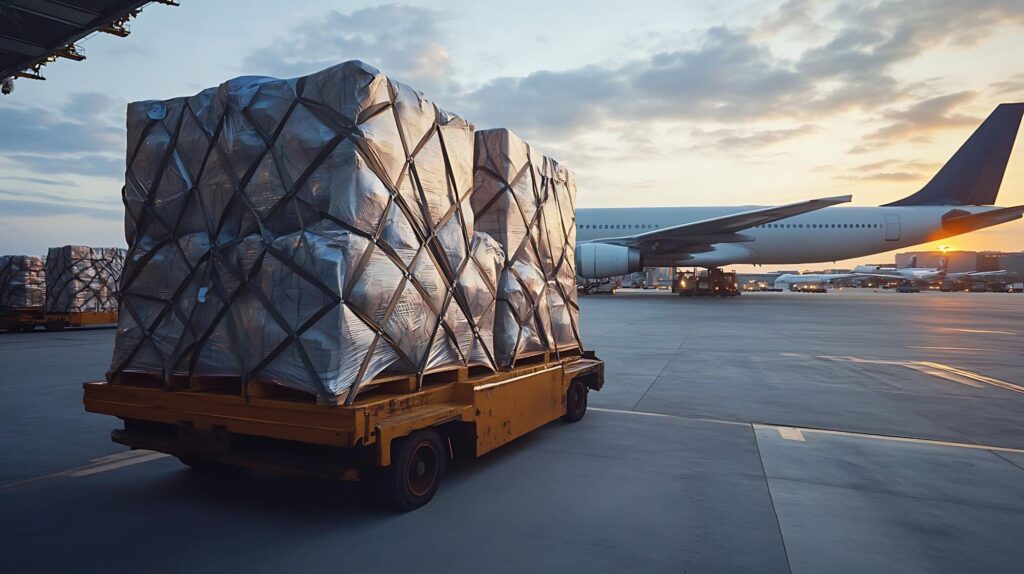
Trackonomy’s solutions are at the cutting edge of logistics, helping you prepare for the future.
IoT technology is set to become increasingly ubiquitous, both in logistics and the wider world. Eventually, real-time shipment information could become what customers expect. IoT sensors on shipments could even communicate with autonomous vehicles or register their authenticity on the blockchain. Adopting IoT technology now can put you ahead of the curve.
Many forwarders and carriers already use AI to plan more effective routes and reduce shipping costs, and the use of machine learning technologies will only increase in the future. When you switch to Trackonomy, you become poised to take advantage of further AI advancements.
See Trackonomy in Action
If you’re ready to take your freight forwarder tracking to the next level, Trackonomy is here to help. Contact us today for a free demo and experience the future of logistics operations yourself.